
What Are We Doing, What Works, and What Needs to Change?
Implications for Nursing-Led Care from a National Delphi Consensus on IVF Cycle Monitoring
Sam Costa for the CRYSTAL Study Group
Nurse-led ultrasound monitoring
Endorsed core follicle & endocrine parameters
Delphi consensus
Study Question
What are the current practices, preferences and priorities for IVF cycle monitoring records with a focus for nursing-led clinical care?
Summary Answer
The Delphi consensus (the CRYSTAL study) highlighted core monitoring components, preferred presentation formats, and areas requiring standardisation to support safe, efficient nursing-led IVF cycle monitoring.
What is Known Already
"There are no universally accepted standards for cycle monitoring records."
IVF cycle monitoring records are central to nursing workflow, clinical communication and patient safety in assisted reproduction. Variability in documentation, information entry and structure can increase interpretation errors, cognitive burden and inconsistencies in escalation.
There are no universally accepted standards for cycle monitoring records. Understanding clinician consensus on what should be monitored, how information should be presented, and where gaps exist can inform nursing practice improvements and standardise documentation across clinics.
Study Design & Methods
Study Design
Participants
- Clinicians
- Nurses
- Reproductive medicine specialists
Participants provided structured ratings on the importance, structure and presentation of IVF cycle monitoring elements. Predefined consensus thresholds were applied. The consensus explicitly addressed the role of advanced analytics, including artificial intelligence.
Main Results
of units with nurse-led ultrasound monitoring
of units with daily scanning available
used purpose-designed electronic systems
relied on handwritten records
identified direct scanner integration as preferred
documented follicular data via free text or transcription
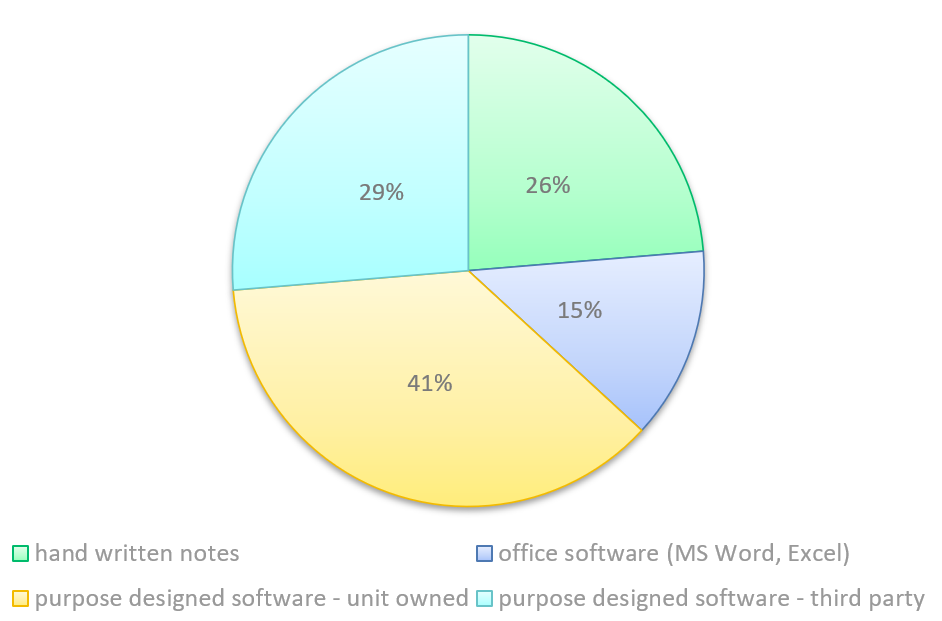
Record-keeping methods
71% used purpose-designed electronic systems, 26% relied on handwritten records and 15% on office software.
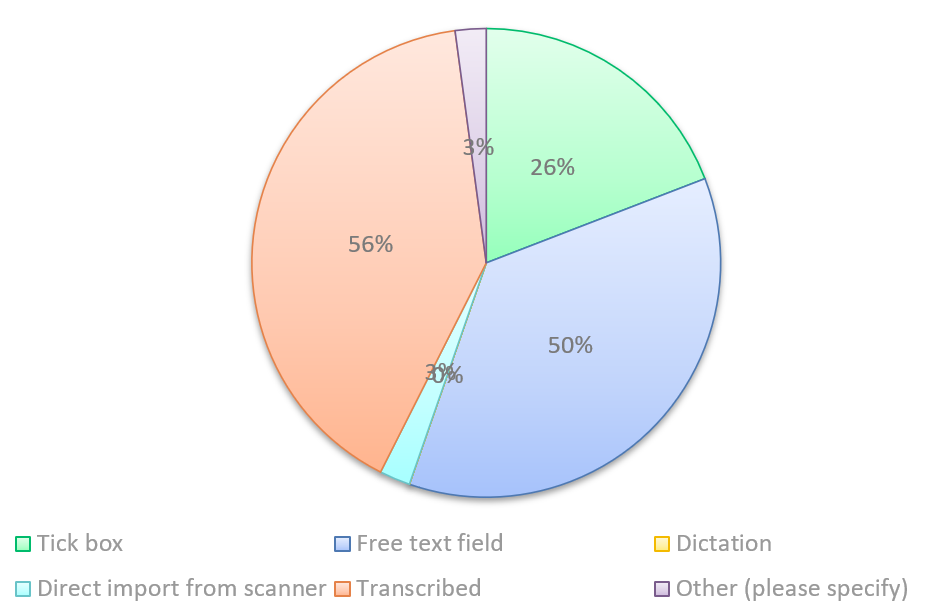
Data entry methods
56% documented follicular data via free text or transcription, despite 75% identifying direct scanner integration as preferred.
Core parameter consensus
More than 90% of respondents endorsed follicle and endocrine parameters. FSH (29%) and follicle morphology (18%) were infrequently prioritised, indicating clear differentiation between decision-critical and lower-utility measures.
Structured timeline preferred
Strong agreement on data organisation in a structured cycle-day timeline integrating ultrasound and hormonal findings. Longitudinal visualisation of follicular development and separate documentation of left and right ovarian parameters were consistently preferred.
Graphical presentation favoured
Graphical data presentation was strongly favoured to facilitate trend recognition and reduce cognitive burden in nursing-led interpretation.
AI and advanced analytics
Respondents expressed strong interest in advanced analytics, including pattern recognition and risk estimation, provided such tools augment rather than replace clinical judgement. Transparency and reproducibility emerged as key requirements.
Limitations
The Delphi method reflects expert opinion and consensus rather than empirical outcome data. The results describe perceived preferences and priorities rather than validated clinical outcomes or workflow efficiency metrics.
An evidence-based framework for nursing-led IVF care.
The CRYSTAL consensus provides an evidence-based framework for standardising IVF cycle monitoring records, underscoring nursing-led care priorities and informing future quality improvement, education and documentation guidelines in assisted reproduction.
Considerable heterogeneity in current monitoring practices was identified — from nurse-led ultrasound in 74% of units to 26% still relying on handwritten records. Standardisation is both necessary and achievable.
The consensus supports the safe integration of AI-enabled tools that augment nursing judgement, with transparency and reproducibility as non-negotiable requirements for clinical trust.
Ethics Approval
UQ Ethics ID number: 2025/HE000908
Keywords